
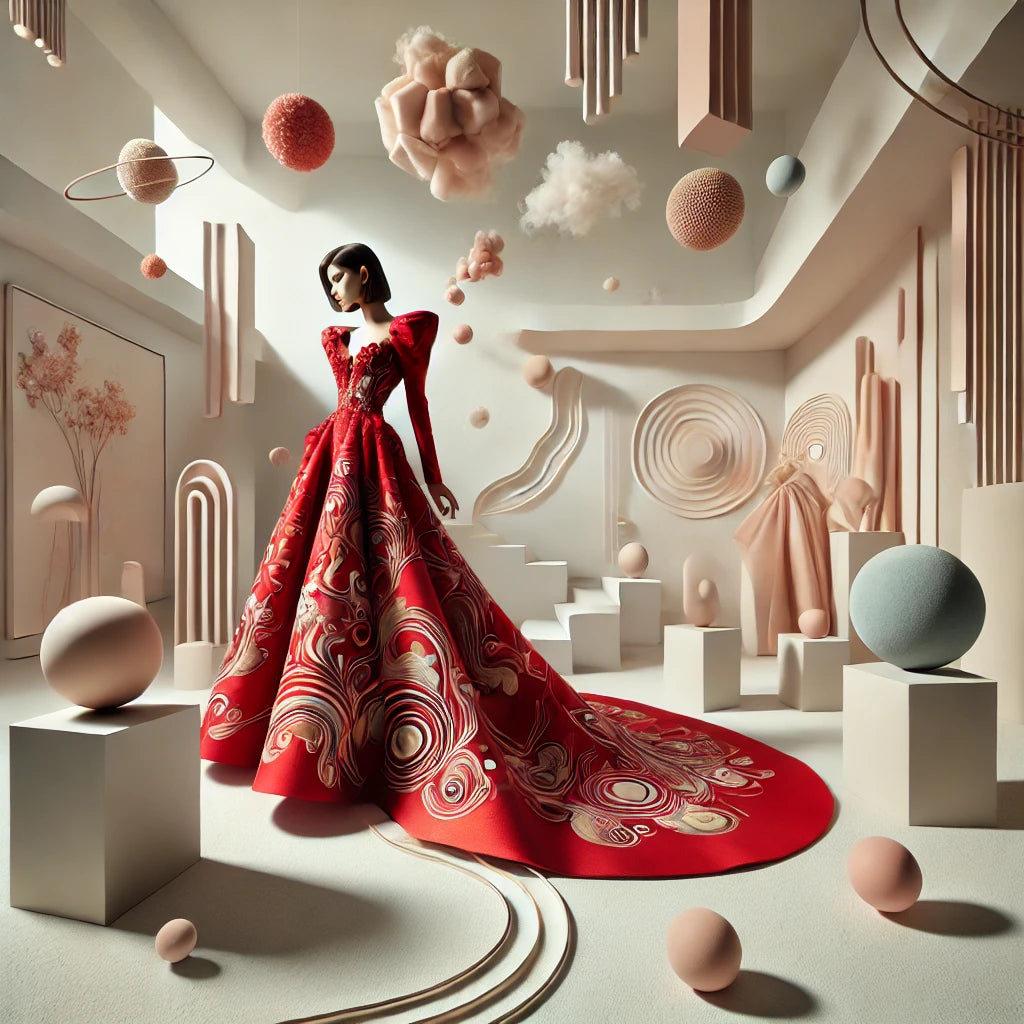
Textile Revolutions: From Craftsmanship to Provocation
Fashion isn’t just about clothing; it’s a cultural revolution. Throughout history, designers have redefined the industry by merging textile innovation with artistic vision.
Elsa Schiaparelli, a close friend of Salvador Dalí, famously incorporated surrealist elements into her designs. One of her most controversial creations was the “Lobster Dress,” made in collaboration with Dalí himself. This shocking piece, featuring a giant painted lobster, was immortalized in a Vogue photo of Wallis Simpson. It sparked debates over whether fashion could truly be considered art.
Similarly, Alexander McQueen’s 1999 runway show left audiences stunned. In the finale, a model wearing a pristine white dress stood motionless as robotic arms sprayed her with paint. This wasn’t just performance art; it was a commentary on technology’s role in craftsmanship. Today, materials like leather and crocodile have inherited this spirit, evolving from practical origins into canvases for provocation.
Fashion’s revolutions remind us that clothing can provoke thought as much as it pleases the eye. In a world yearning for meaning, every garment can become a symbol of change.

